Preamble
Much has been said about humanoid robots, quantum chips, and autonomous agent swarms. Yet beneath the media noise, one truth persists: the Large Language Model remains the beating heart of the digital revolution. It powers automation, generates code, and structures the augmented thought of our era.
The year 2025 was not merely incremental. It marked the advent of reasoning architectures, the collapse of the barrier between open-source and proprietary models, and a price war that reshaped the industry's economic foundations. Legacy giants faltered. Outsiders emerged with unexpected ferocity.
This dossier surveys the winners and the fallen, offering the keys to navigate 2026 with clarity.
Best Generalist: The Art of Versatility
A generalist model is no longer judged by its conversational ability alone. It must shift seamlessly between creative prose, logical deduction, and structured data analysis—without losing the thread.
GPT-5.2 from OpenAI stands as the reference. Released on December 11, 2025, it embodies OpenAI's strategic response to a year of intense pressure. Following an internal "Code Red" triggered by Google's first-half dominance, the company opted for a dynamic architecture built around three modes: Instant for responsiveness, Thinking for deep reasoning, and Pro for maximum precision. With 400,000 tokens of context and 128,000 tokens of output capacity, GPT-5.2 digests massive documents without strain. Its style can be verbose, occasionally grandiose, but the absence of major weaknesses makes it the most reliable tool for the vast majority of use cases.
Two alternatives deserve attention. Claude Opus 4.5 from Anthropic, released in late November 2025, excels at scrupulous adherence to complex instructions and the production of structured professional documents—at the cost of occasional overcaution in creative contexts. Gemini 3 Pro from Google reigns over long-memory tasks: its one-million-token context window makes it the natural ally of researchers and analysts, even if it trails slightly in programming logic.
Best Model for Code: The Age of Agentic Engineering
The barrier to software development has been permanently lowered. We no longer speak of code completion, but of autonomous software engineering.
Claude Opus 4.5 dominates this category without contest. Anthropic's strategic bet on the developer ecosystem has paid off: it is the first model to break the symbolic 80% barrier on the SWE-bench Verified benchmark. What sets Claude apart is its grasp of architectural context. It does not merely write syntax—it refactors modules, identifies obscure bugs, and implements features by reasoning across the entire codebase. Its ability to control desktop environments and browsers allows it to test its own code in real time, making it the most accomplished development partner available today.

DeepSeek 3.2 stands out for its explicit reasoning approach, particularly effective on algorithmic problems and complex back-end logic. Devstral 2 from Mistral AI, the European champion, posts 72.2% on SWE-bench with a significantly better cost-efficiency ratio for high-volume production environments.
Best Value: The End of Expensive AI
The era of artificial intelligence reserved for deep pockets is over. In 2025, the cost of intelligence dropped dramatically, allowing startups to deploy frontier models for a fraction of their 2024 budgets.
DeepSeek 3.2 wins this economic battle. By focusing on massive optimization and transparency in its training process, DeepSeek delivers a model that rivals GPT-5.2 in logic and mathematics for roughly one-third of the price. For any business building at scale, it has become the default choice for API integration.

Llama 4 Scout from Meta deserves attention: this 109-billion-parameter model runs on a single high-end consumer GPU, democratizing access to frontier capabilities on local infrastructure.

Devstral Small 2 from Mistral, with only 24 billion parameters, outperforms models five times its size—proving that compact intelligence often beats bloated mass.
Best Open-Source Model: Data Sovereignty
The distinction between "open weights" and "true open source" became critical in 2025. Data sovereignty is now a strategic priority for global enterprises.
The year's surprise came from China. Kimi k2 from Moonshot AI is a colossal one-trillion-parameter Mixture-of-Experts architecture, designed natively for autonomous work. Unlike models requiring external wrappers, Kimi k2 browses the web, verifies its own assertions, and corrects its logic in a closed loop. Its KimiDev 72B variant outperforms nearly every proprietary model on SWE-bench, offering developers who wish to host their own agentic intelligence an unmatched tool.

Parameters (MoE)
SWE-bench
Weights
Qwen 2.5 from Alibaba remains the most reliable model family for commercial use, thanks to its Apache 2.0 license and consistent performance across all model sizes. Llama 4 from Meta, though technically limited by usage restrictions, remains the standard for the vast majority of developers needing a robust multimodal foundation.
Best Reasoning Model: Thinking Before Answering
Reasoning represents the current frontier of artificial intelligence. It is the capacity to pause, to reflect, to move beyond pattern recognition.
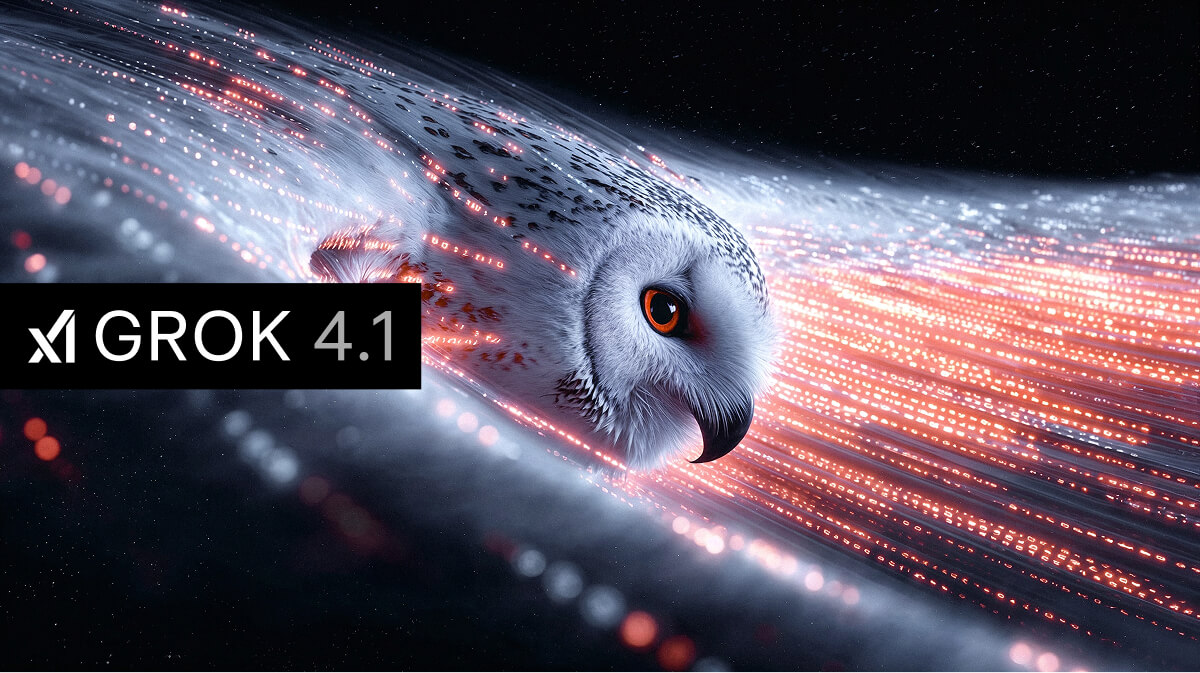
Grok 4.1 from xAI delivered a shock. A year ago, Grok was a curiosity. Today, it is a titan. In mid-November 2025, it seized the top spot on the LMSYS Chatbot Arena, the benchmark of record. Under Elon Musk's direction, xAI replaced project managers filming their matcha lattes with an army of engineers obsessed with computational efficiency. The results speak for themselves: its Reflexion mode leads the nearest competitor by 30 points, with a 65% reduction in hallucinations. Less filtered than its rivals, it serves as a superior tool for objective, uncompromising research.
GPT-5.2 Pro reaches 93% on the GPQA Diamond benchmark, which evaluates doctoral-level scientific knowledge. DeepSeek 3.2 Special distinguishes itself by showing its work, providing full traceability for every logical step.
Best Multimodal Model: Beyond Text
In 2026, a text-only model belongs to the past. Leading architectures must understand the world through images, video, and audio natively.
Gemini 3 Pro from Google claims this ground naturally. Google's access to the world's visual and video data has finally translated into a decisive lead. Trained natively on trillions of tokens across all modalities, Gemini 3 Pro can analyze a fifty-page document, watch a twenty-minute video presentation, listen to a podcast, then synthesize a coherent report cross-referencing all three sources. For multimodal analysis, Google sets the gold standard.
Llama 4 from Meta marks the arrival of the first truly multimodal Llama, trained on the massive visual context of Instagram and Facebook. GPT-5.2 remains a strong contender through its fluid integration of DALL-E and advanced audio features.
Greatest Momentum of the Year
This category rewards the dynamics of 2025—the players who moved the needle furthest.
The Chinese ecosystem—DeepSeek, Qwen, Kimi—earns this collective distinction. Eighteen months ago, Chinese models were perceived as lagging copies. Today, they define the state of the art in cost efficiency and agentic architecture. Despite hardware restrictions and geopolitical tensions, the combined progress of DeepSeek, Alibaba, and Moonshot constitutes the year's defining narrative. They demonstrated that algorithmic optimization can overcome hardware scarcity.
Mistral AI evolved from a promising startup into a pillar of European AI sovereignty. xAI closed a ten-year gap with OpenAI in less than twenty-four months through sheer engineering intensity.

Flop of the Year
Success is not measured by technology alone; it is measured by the product.
Meta embodies this painful paradox. The company produces some of the world's best open-weights models with Llama 4, yet the implementation of Meta AI across Instagram and WhatsApp represents a monumental waste. Despite investments comparable to the GDP of a small nation, the user experience remains mediocre. Meta possesses the finest engines on the market but installs them in soulless chassis. Three billion users awaited a revolution; they received a clumsy, underpowered assistant.
OpenAI's "Code Red," a panic response to Gemini 3, betrayed a lack of strategic composure. Google, absent from the race for 80% of the year, had to orchestrate a massive fourth-quarter catch-up.
Model of the Year 2025
Claude Opus 4.5 from Anthropic claims the supreme distinction.
This choice will surprise those who follow only the marketing noise. But for practitioners, developers, and demanding professionals, Claude stands as the most accomplished partner. Beyond the benchmarks—where it excels—Claude possesses a quality difficult to quantify: a singular texture of reasoning. It is the model that most resembles a human collaborator. It does not grow lazy mid-task, hallucinates less frequently, and grasps the subtle nuances of human intent better than GPT-5.2.
Anthropic established the standard for Computer Use and agentic workflows. While others chased benchmarks, Anthropic chased utility. For this reason, Claude Opus 4.5 is the model we recommend to those who actually use AI to accomplish serious work.
Strategic Recommendations for 2026
The AI monopoly is officially over. In 2026, choosing a model no longer means finding "the best"—it means identifying the right tool for the right task.
For developers, the primary tool remains Claude Opus 4.5, with DeepSeek 3.2 as a cost-effective backup. Researchers should favor Grok 4.1 for reasoning and Gemini 3 Pro for massive document analysis. Startup founders would do well to leverage the Chinese ecosystem—Qwen and DeepSeek—to preserve margins without sacrificing intelligence. For the general user, GPT-5.2 remains the most balanced daily companion.
The artificial intelligence revolution is no longer coming: it is here, and it is fragmented. The winners of 2026 will be those who know how to navigate this multi-model landscape. Do not wait for a single company to solve all your problems. Diversify, experiment, stay sharp.
2025 was intense. 2026 promises to be vertiginous. The pace will only accelerate. Take the tools, absorb the knowledge, and let us build what comes next.